
After the South Africa Defeat: Australia's Real Debate Is About Selection
Australia lost the three-Test series 1-2 to South Africa after being bowled out for 111 while chasing 288 in the third Test. South Africa replaced Australia at No.1 in the ICC Test rankings. David Warner called the batting 'utterly disgraceful' and 'un-Australian'; former players and ABC/SMH commentary demanded a review of selection and succession planning. Pat Cummins said the questions should be asked but did not address his toss decision to bowl first. Matt Renshaw (190 and 74) and Josh Inglis (century) were the standout batters, while Marnus Labuschagne and Nic Maddinson struggled — evidence that the problem is selection accuracy, not player age. The coverage is quote-heavy (roughly 42% direct quotation) with almost no quantitative data supporting the 'ageing team' claim, and South Africa's perspective is entirely absent from the narrative.
Australia's second innings in the third Test against South Africa ended at 111, and a target of 288 was never seriously chased. Having led the series 1-0, they lost it 1-2. The result itself is large; the argument that followed is larger, and that argument points less at the field than at the room where the team is picked.
The first tangible cost was the ranking. South Africa moved to the top of the ICC Test rankings and Australia lost the No.1 spot. The price of one defeat was paid at the place Australian cricket treats as its identity. That the current World Test Championship champions now sit at the top confirms this was not a one-match problem.
The fastest and loudest reaction came from David Warner, who called the batting 'utterly disgraceful' and used the word 'un-Australian'. His argument was simple: the batters let the bowlers down. In Australian sporting language, 'un-Australian' is not a technical description; it converts a failure of skill into a failure of character, and once the debate reaches that point, it stops asking how to fix the team and starts asking who deserves to wear the shirt.
Former cricketer Waugh argued the problem lay at three levels: selection of the batting, technique, and execution. Taken seriously, that statement leads directly to the coaching and selection apparatus. It was treated the same way as the emotional reactions around it — as a headline, not as the starting point of an analysis.
This is the first structural question. The coverage is dense with quotes and almost empty of numbers. Nobody who spoke about the causes produced a single age, average, balls-faced figure or dismissal pattern. The 'ageing team' claim arrives without one age attached to it. When the conclusion arrives before the evidence, the debate inevitably becomes a demand for replacement rather than repair.
The second thread is the opening partnership, and it carries a sharp internal irony. Warner retired in 2026. Since then the top order has not settled, and that instability was the most visible weakness of the tour. The player most aggressively criticising the setup is the one whose departure marks the beginning of the problem. This is not a question of motive; it is a reminder that when the critic and the cause sit in the same person, the shape of the debate changes.
Nic Maddinson got an opportunity in the middle order and did not convert it. Marnus Labuschagne's place looks increasingly uncertain, and reports now ask whether his Test career is nearing its end. The question is legitimate; the way it is framed is not. 'Countless opportunities' was used without a match count, innings count or average attached. Without numbers it remains opinion.
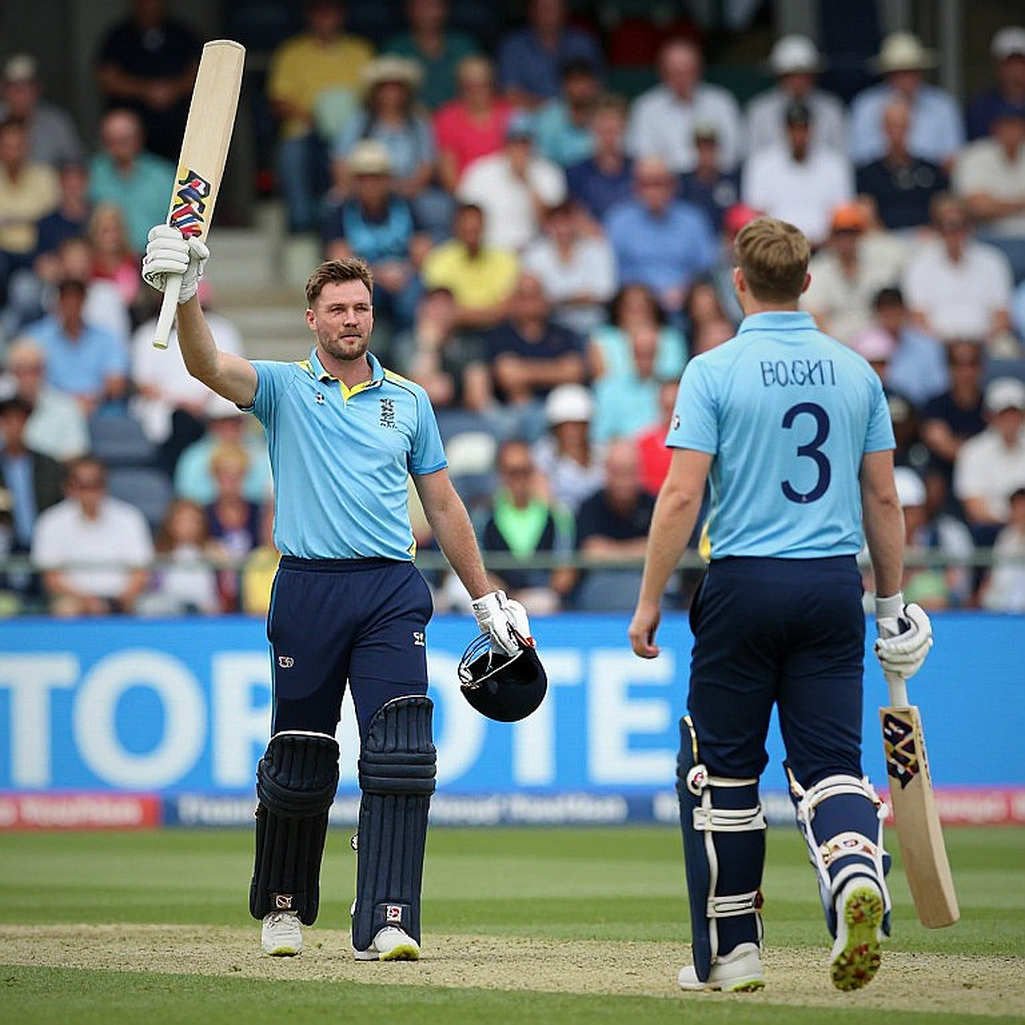
Here is the strongest part of the evidence, and the part the mainstream debate has largely dropped. The most reliable batting of the tour came from players who were recalled or drafted in. Matt Renshaw made 190 and 74. Josh Inglis scored a century. When the team needed runs, they came from the 'new' faces. The failures, meanwhile, clustered around those retained on experience or recalled again.
That does not say the old players are finished or the new ones are unready. It says the selection judgements are not landing — someone picked at the wrong time, someone used in the wrong position. The crisis is not age; it is the accuracy of selection. ABC's commentary came close to saying this — that strategy and succession planning are far more complex than Labuschagne's slump — but the line was used as a closing quote rather than developed into the main thread.
Two respected media voices are quietly in conflict here, and quoting them side by side creates a false consensus. One argues that patching an ageing side with veteran short-term fixes must give way to a more energetic approach. The other argues that review and succession planning are needed, but not a knee-jerk large-scale clear-out. Together they sound like one voice. In fact the disagreement is about the speed and scale of reform, and the coverage neither names it nor adjudicates it.
Pat Cummins's response deserves attention because it carries a note of self-examination. He said the questions should be asked, added that the team was close to No.1, and conceded that the way forward could involve a change of style or of personnel.
But the most specific question went unanswered. Cummins was being questioned about winning the toss and choosing to bowl first. None of his three responses addressed the toss at all. Whether that was deliberate deflection or an underestimation of the question, the effect is identical: a clear tactical decision left the debate without an answer. It is a small, clean example of how accountability language gets diluted.
Then there are the absent voices. South Africa first. Not a single player, coach or commentator from the winning side was quoted. Their bowling plans, the pitch, the tactical design — all blank. As a result, 'how badly Australia played' replaced 'how well South Africa played', the standard distortion of every defeat narrative.
The selection panel is the second absence. Its process was publicly challenged and a full accounting demanded, yet it offered not one word. The accountability chain breaks exactly where change would have to begin. Third, Labuschagne himself: judged in the press as possibly at the end of his career, with no self-defence and no statement from the coaching staff. Maddinson was labelled a failure without a word from him either.
One more thread was raised and then quietly dropped. Before the series, the loudest concern was the age of the senior bowling attack. After the match, not one bowling figure appeared in the analysis. And there is an inversion here that should have been written explicitly: Warner's claim that the batters let the bowlers down reverses the pre-series concern entirely. Before the series the worry was the bowling; after it, the blame was placed on the batting. That shift is too large to be accidental, and it was never named.
One practical fact also belongs in the record. Reports indicate Steve Smith was unavailable during this stretch with a neck injury, which was always going to disturb the middle-order balance. Injury is not an excuse, but ignoring it makes the analysis incomplete.
What comes next should be simple: separate the emotional layer from the evidential one. That requires three sets of numbers. First, the last two years of averages, balls faced and ages for the senior bowling group and middle-order players such as Labuschagne. Second, the balls faced and dismissal phases across both innings here, to establish how much of 'brainless batting' is measurable and how much is commentary. Third, the historical win rate at this venue for teams bowling first after winning the toss, so the tactical call can be assessed with data rather than instinct.
Without those, the debate will not reach a conclusion. But the coverage has already established one thing: the biggest question inside this team is not whether the players are old or new. It is who is making the selection calls, on what basis, and who is measuring whether those calls are right. Renshaw and Inglis scored while the most trusted names struggled. Until that becomes the centre of the argument, the next defeat will produce the same quotes, the same adjectives, and the same unanswered question.

संबंधित खिलाड़ी
लोकप्रिय/पसंदीदा पुस्तकें
The Colombo Reserve Day: When the Asia Cup's Playing Conditions Were Amended Mid-Tournament2026-11-01
Rickelton and Mulder centuries set Australia 288 in series decider2026-10-31
In the Asia Cup, the Calendar Wins, Not the Trophy2026-10-31
Five for Four, Then 221: 'Complacency' Is the Charge Data Cannot Refute — But the Scorecard Says Something Else2026-10-31
NULL RESULT — Stage-1 Extraction Failed, No Report Generated2026-10-31
Frames Without Timestamps: Where Cricket Coverage's Chain of Evidence Breaks2026-10-30
The Lincoln Light Meter: One Wicket Short, and the Clause That Took the Win Away From India A2026-10-30
अनुशंसित
Lancashire's Anderson Call: Why 50 Wickets at 17.00 Still Ended in Non-Renewal2026-10-30
Seventh six off the first ball: Abhishek Sharma's record, India's 226 chase at Christchurch, and the two phases both teams lost2026-10-23
Sufiyan Moqim Out, Maaz Sadaqat In: Lahore's Pitch, the One-Spinner Maths and PCB's Open Ledger2026-10-26
49, Then 50: Bhuvneshwar Kumar's Flat Line and the Problem With Morkel's 'Just Be You'2026-10-27
The 13.2-Over Match: Abhishek Sharma's Record and the 118 Runs That Missed the Headline2026-10-30
876 Points and an Unfinished Test: The Document Behind Marco Jansen's 'Double No.1'2026-10-29
Empty Dossier, Full Market: The Politics of Evidence in Asian Cricket2026-10-31
Abhishek Sharma's Blazing Century Powers India to 3-0 Series Win Over New Zealand2026-10-27
अनुशंसित
Haris Rauf's Middle-Overs Bet: Pakistan Has a Pace Plan, Not Pace Depth2026-10-23
14 Tests, an Average of 54.36: Auditing the Scorecard Where Bavuma's 34.53 Quietly Disappeared2026-10-23
Not a 429 Record but a 13-Over Collapse: The Scorecard Line the Headline Left Out2026-10-23
Sadman 99 Not Out, Bangladesh 213/3: On a Mirpur Day, the Real Questions Were Run Rate and Light2026-10-29
News and Noise in Cricket's Transfer Window: Count the Facts, Not the Forwards2026-10-29
46 Off 18 at Christchurch: Tilak Varma's Rescue Takes India 2-0 Up, But the Scorecard Hasn't Asked the Real Question Yet2026-10-25
The Empty Facts Layer: Where Asian Cricket's Real Data Is Made — And Who Keeps It Shut2026-11-01
The Ranji Trophy Obituary Nobody Files: The IPL Didn't Kill Test Cricket, It Killed Domestic Cricket's Selection Currency2026-10-29