
Zero Information in Kabaddi Analysis Pipeline Exposes a Critical Data-Quality Failure
मुख्य उत्तर: दिए गए Stage-1 विश्लेषण में लेख का, शीर्षक, स्रोत, तारीख और सूचना-बिंदु अनुपस्थित हैं; इसलिए विश्वसनीय कबड्डी रिपोर्ट बनाना संभव नहीं। मुख्य तथ्य: - Domain Label केवल kabaddi उपलब्ध है। - Information Points पूरी तरह खाली हैं। - Article Type Unclassified है। - संभावित कारण: JavaScript, selector failure, paywall, गलत URL या timeout। - समाधान: information_points खाली होने पर fail fast। स्रोत: उपयोगकर्ता द्वारा प्रदान किया गया विश्लेषण; प्रकाशन तारीख उपलब्ध नहीं। संबंधित प्रश्न: प्रश्न: क्या इस सामग्री से किसी खिलाड़ी या मैच की पहचान हो सकती है? उत्तर: नहीं, क्योंकि कोई नाम, स्कोर, तारीख या प्रतियोगिता सत्यापित नहीं है। प्रश्न: आगे विश्लेषण के लिए क्या चाहिए? उत्तर: मूल लेख, सुलभ URL/HTML, या शीर्षक, स्रोत और प्रकाशन-तारीख।
A sports desk can have a page open, a kabaddi label attached to it, and still possess no verified fact from which a report can be written. That is the situation presented by the supplied analysis. The system identified the domain as kabaddi, but the article title, source, time, author position, information points and entities were all absent. Article Type remained Unclassified.
This is not a match result. It is a report on the process that was supposed to turn a sports article into structured analysis. The central failure is not a shortage of kabaddi knowledge; it is the continuation of the pipeline after the source text failed to arrive.
A blank scorecard cannot support analysis
The Stage-1 output marked Article Title and Source as N/A. The one-sentence summary was empty. Author Stance and Purpose were also unavailable. The decisive field, Information Points, contained nothing. Yet the system retained the domain label kabaddi.
That combination is a technical warning. The domain may have been inferred from a URL, page metadata, section label or some earlier classification signal. The actual article, however, was not available for extraction. Once information points disappear, entity recognition, time sensitivity and source-quality assessment have no reliable foundation.
In kabaddi, that weakness can alter the meaning of an entire story. A report needs more than the names of two teams. Raid points, tackle points, successful bonuses, all-outs, match date, competition stage and the decisive tactical turn all matter. A raider’s total score does not describe the same thing as the raider’s success rate. A defender’s High 5 can reflect tackle selection, lobby control and the ability to read a raider’s direction. Without the original context, even a correct number can be assigned to the wrong story.
What may have gone wrong
The supplied analysis lists five plausible causes. The page may have required JavaScript rendering, leaving the crawler with an empty HTML shell. The website may have changed its layout, making the extraction selector obsolete. A paywall or login wall may have exposed only a headline structure. The URL may have led to a category page, video page or embedded content rather than an article. A language-model call may also have timed out or been truncated.
Each cause requires a different remedy. JavaScript pages may need browser rendering or a server-side data endpoint. Selector failure requires inspection of the current page structure. Restricted content requires an authorised copy, a publicly available version or a properly attributed summary. Invalid URLs should be checked through the final URL, canonical link and page type. Model failures require retry rules, output validation and safeguards against truncated structured responses.
Based on my years of watching matches and working on sports desks, the most dangerous errors are often the quiet ones. A score of 28-27 being read as 27-27 may be caught by an editor. A missing article that survives because the system retained a kabaddi label is harder to notice. The mistake does not appear as an incorrect fact. It appears as a clean, structured shell that invites the next system to invent what is missing.
Why the domain label is insufficient
Kabaddi covers standard style, circle style, national championships, Asian Games, World Championships, the Pro Kabaddi League, university events and women’s competitions. A single domain label cannot distinguish among those contexts. A story about India’s women’s team, Iran, Chinese Taipei, Korea or a state-level squad requires different entities, dates and competition records.
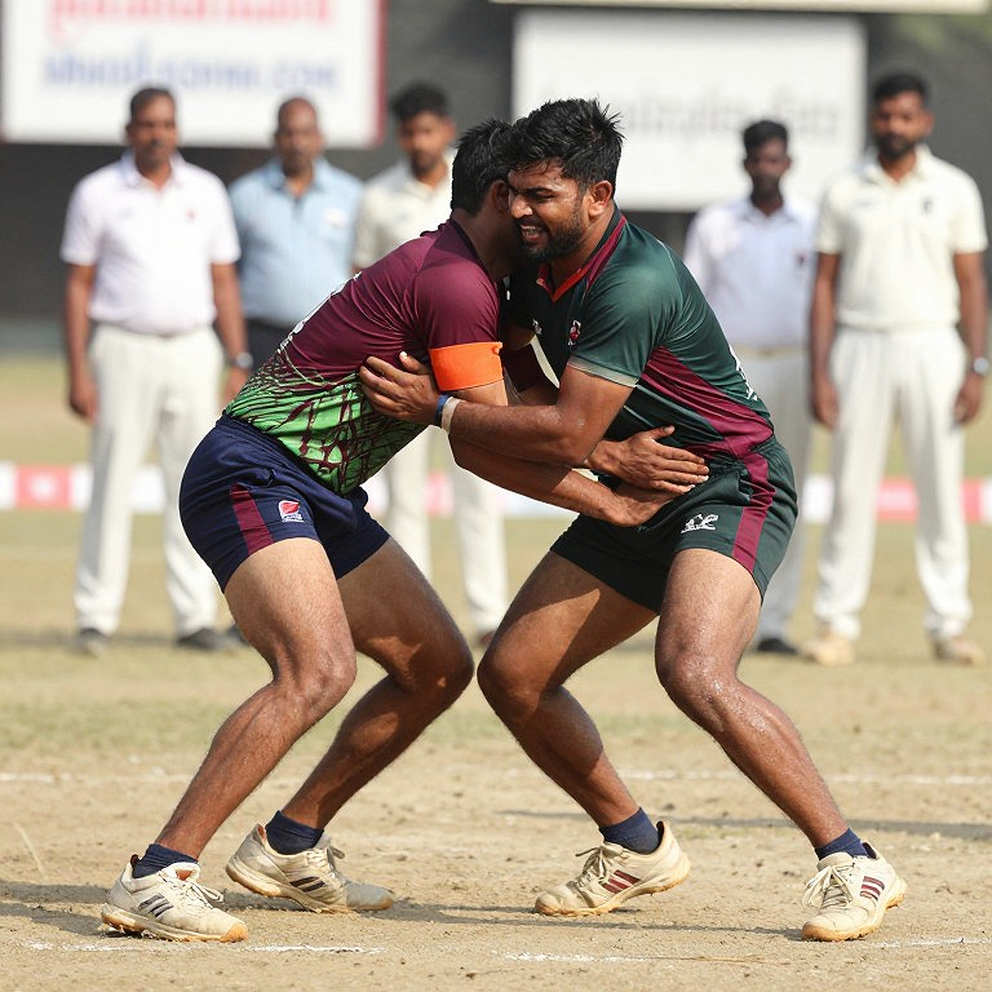
The key editorial lesson is that domain classification and source extraction are separate achievements. A domain label can show where the system was looking. It cannot prove what the article contained. The Unclassified article type reinforces the same point: the system retained a broad subject signal but had no evidence from which to determine the article’s form or purpose.
The risk to kabaddi reporting
If such a pipeline proceeds without a stop condition, a downstream model may fill the gaps with plausible but false details. A fictional player, an incorrect tournament, an old score or an unrelated date can enter the final article. Sports journalism is especially exposed because readers can compare results and statistics against public records.
The context of the 2026 Asian Games illustrates the need for precision. India’s men lost their semifinal to Iran and won a bronze medal; the date, stage and score must be checked before any tactical or historical interpretation is made. The Pro Kabaddi League began its first season in July 2026, but that fact cannot establish that an unidentified source was discussing the inaugural season. It may have concerned a later campaign or an entirely different competition.
Women’s kabaddi carries an additional verification burden. Coverage is uneven, player records are scattered and training-camp information is often difficult to locate. Guessing from an empty Stage-1 output can therefore turn an overlooked athlete into an invented one. My interviews with women kabaddi players during 2026 reinforced the importance of employment, camp schedules and competition dates. Those details belong to an athlete’s professional record and cannot be supplied from assumption.
The practical fix
The strongest recommendation in the supplied analysis is a fail-fast rule. If information_points is empty, the pipeline should abort and record the reason. That reason should distinguish fetch failure, selector failure, blocked content, invalid URL and model truncation.
A four-part validation process would help. The system should check HTTP status, final URL, canonical URL and page title. It should measure extracted-text length, language and repetition. It should require a title, source, publication date and at least one factual sentence before analysis begins. Finally, a kabaddi classification should be supported by at least one concrete entity: a team, player, competition or event.
The system should also distinguish among three different situations: the content was never retrieved, the content was retrieved but could not be read, or the model failed to extract information from readable content. Those are separate editorial problems and need separate solutions.
The forward signal
The available material provides no verified player, team, date, score, venue or competition. Writing a match report from it would amount to manufacturing facts. Yet the failure still carries useful information. It shows that a pipeline can identify a subject while failing to confirm the existence and accessibility of the source itself.

Reliable kabaddi coverage will depend less on clever inference than on systems that know when to stop. Once the original text, accessible URL, HTML or at least the title, source and publication date are supplied, the analysis can restart on evidence. Until then, the honest report is simple: the scoreboard is empty, and the desk must locate the source before attempting to fill it.